

A pain that starts in the lower back or buttock and “shoots” down the leg, like an electric shock or a burning feeling. Sometimes with numbness or pins and needles down to the toes. This is sciatica. And the questions everyone asks are the same: how does it go away, which medicine helps, does a cream do anything. Let’s take them one by one.
What is sciatica
The sciatic nerve is the largest nerve in the body. It is formed by nerve roots in the lower part of the spine, passes through the buttock and runs down the back of the thigh to the foot. Sciatica is the pain that follows this path.
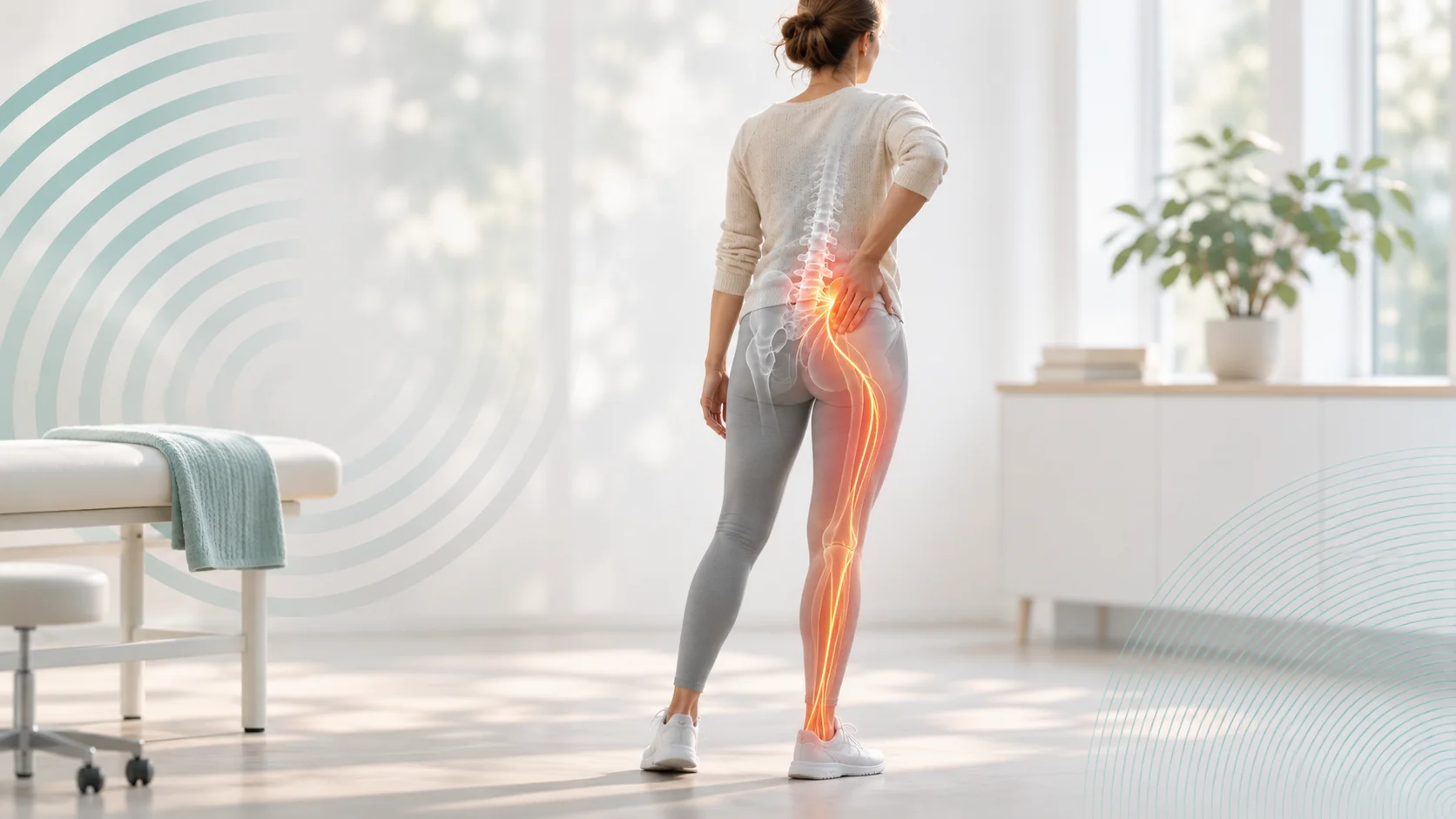
In most cases it is caused by irritation of, or pressure on, a nerve root, most often from a herniated (slipped) disc. Other causes include spinal stenosis, spondylolisthesis and, less often, piriformis syndrome in the buttock.
What sets it apart from ordinary back pain:
- The leg pain is often worse than the back pain.
- It usually affects one leg and reaches below the knee.
- It may come with numbness, pins and needles or weakness.
- It gets worse with coughing, sneezing or sitting for long periods.
For pain that stays in the lower back, see our page on low back pain (lumbago).
How long it lasts and how it goes away
The good news: for most people sciatica improves within a few weeks. In a well-known Dutch study of 183 patients, published in the New England Journal of Medicine, 87% reported improvement within 12 weeks.
The same study showed something else: people who stayed in bed for two weeks did no better than those who carried on with their daily activities.
But improvement does not mean you have to put up with severe pain for weeks. And for some people the pain persists or comes back. That is when a specialist assessment is needed.
What helps in the first days
- Stay as active as you can. Short walks, within the limits of the pain. No lying in bed for days.
- Avoid sitting for long periods. Get up and walk a little every half hour to an hour.
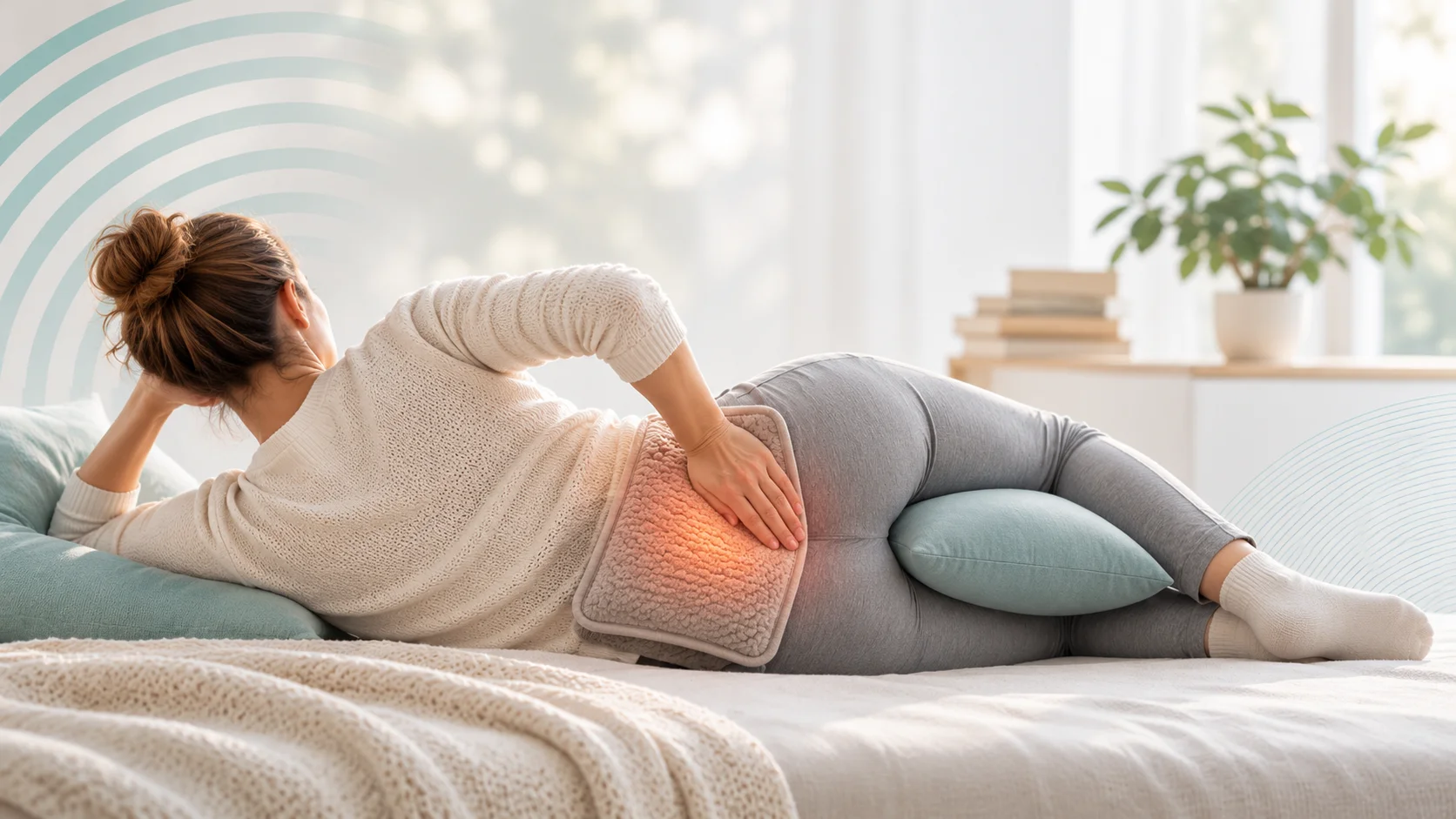
- Find the position that eases it. Many people feel better lying on their back with knees bent, or on their side with a pillow between the knees.
- A warm pack on the lower back or buttock can relax the muscles that “tighten” around the pain.
- Gentle exercises, ideally guided by a physiotherapist. If an exercise makes the leg pain worse, stop it.
Medicines and creams: what the evidence says
“What is the best medicine for sciatica?” There is no single one for everyone. Simple painkillers and anti-inflammatories may help for a few days, but they have side effects too (stomach, kidneys, blood pressure). That is why they are taken on a doctor’s advice.
It is worth knowing that some medicines often used for nerve pain do not help everyone with sciatica. In a large 2017 study in the New England Journal of Medicine, pregabalin did not reduce leg pain more than placebo, and the UK NICE guidelines do not recommend it routinely for sciatica. The choice of medicine is therefore individual. Do not start or stop medicines on your own.
And creams? An anti-inflammatory gel or a warming cream may soothe the muscles of the lower back and buttock. But it does not reach the nerve root, which lies deep inside the spine. So we do not expect it to resolve the pain that travels down the leg.
When the pain does not settle: what a pain specialist does
If the leg pain is very severe, or lasts more than 4–6 weeks despite the above, there are minimally invasive treatments that can help, often without surgery:
- Epidural or transforaminal injection. A small dose of local anaesthetic and corticosteroid near the irritated root, under X-ray guidance. NICE guidelines suggest considering it in acute and severe sciatica. More in our article on chronic low back pain without surgery.
- Pulsed radiofrequency to the nerve root, for pain that persists. It does not destroy the nerve, but changes how it works so that it transmits less pain. See radiofrequency treatment.
- Ozone therapy, as an option for selected patients. See ozone therapy.
Which one suits you depends on the cause, the examination, the MRI and what you have already tried. Surgery is discussed when conservative treatments do not help or when there is weakness that is getting worse.
When to see a doctor straight away
Do not wait if sciatica comes with:
- Numbness around the genitals or back passage
- Difficulty or loss of control when passing urine or opening the bowels
- Leg weakness that is getting worse, e.g. the foot “drops” when you walk
- Pain in both legs at the same time
- Fever, unexplained weight loss, a history of cancer, or pain after a fall or injury
The first two may signal cauda equina syndrome, which needs urgent hospital treatment.
Frequently asked questions
How can sciatica go away quickly? There is no magic fix. Movement, the right positions and pain relief on a doctor’s advice help most people. If the pain is very severe, an injection treatment by a pain specialist may give faster relief.
Should I stay in bed? No. Bed rest does not speed up recovery. Rest as much as you need, but get moving as soon as you can.
Do I need an MRI? Not always at first. It is needed when there are warning signs, when the pain persists for weeks, or when an interventional treatment is being planned.
Is there a natural treatment? Movement, physiotherapy, heat and stress management help a lot. They work alongside medical care, though, and do not replace a medical assessment when the pain persists.
Sciatica or low back pain? Low back pain is pain in the lower back. Sciatica is pain that travels down the leg, along the path of the sciatic nerve. They often occur together.
Our approach
At the Therapia Specialists Pain Care Unit, in Glyfada and Chalandri, Athens, care starts with a careful assessment: where it hurts, since when, what makes it worse and what you have already tried. Based on this, Dr Triantafyllia Dimou discusses with you the options that suit your case.

Pain that travels down your leg is not something you simply have to endure. Book an assessment in Glyfada or Chalandri.
Sources
- Vroomen PC, de Krom MC, Wilmink JT, Kester AD, Knottnerus JA. Lack of effectiveness of bed rest for sciatica. N Engl J Med, 1999;340:418–423.
- Mathieson S, Maher CG, McLachlan AJ, et al. Trial of pregabalin for acute and chronic sciatica. N Engl J Med, 2017;376:1111–1120. doi:10.1056/NEJMoa1614292
- NICE. Low back pain and sciatica in over 16s: assessment and management (NG59), recommendations 1.2.16, 1.3.5. nice.org.uk
This article is for information only and does not replace a medical examination.